About the author: TJ Tryon is a long-time Porsche owner, Central Indiana Region PCA member, HPDE Instructor and an Engineer, with hands-on experience as an endurance motorsports professional. He maintains his own cars and evaluates engine bore condition through bore scope inspection as part of real-world ownership.
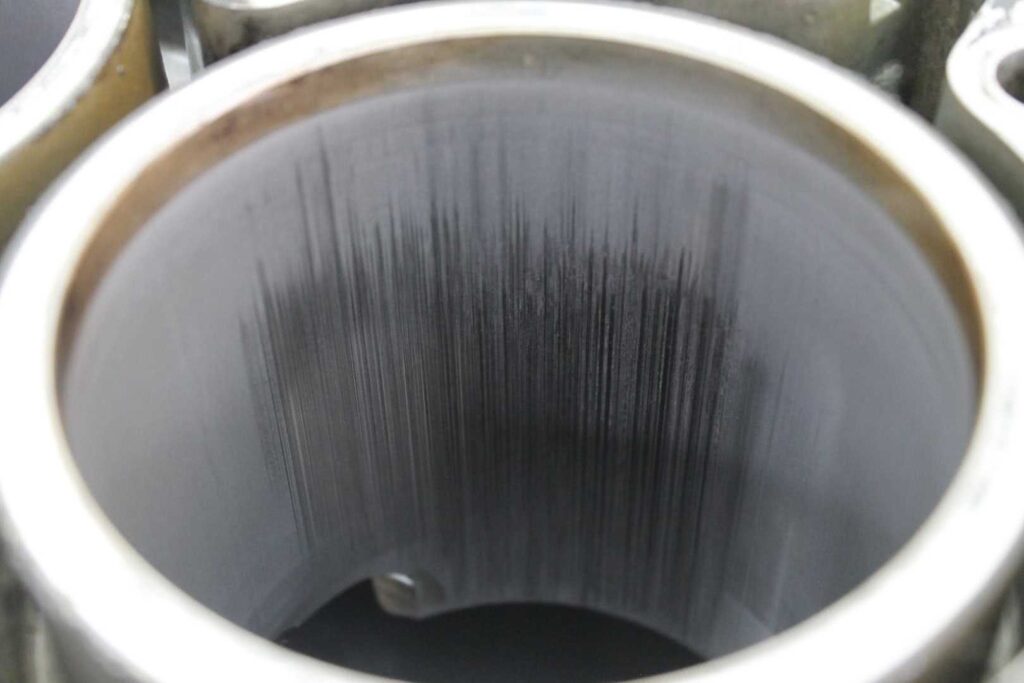
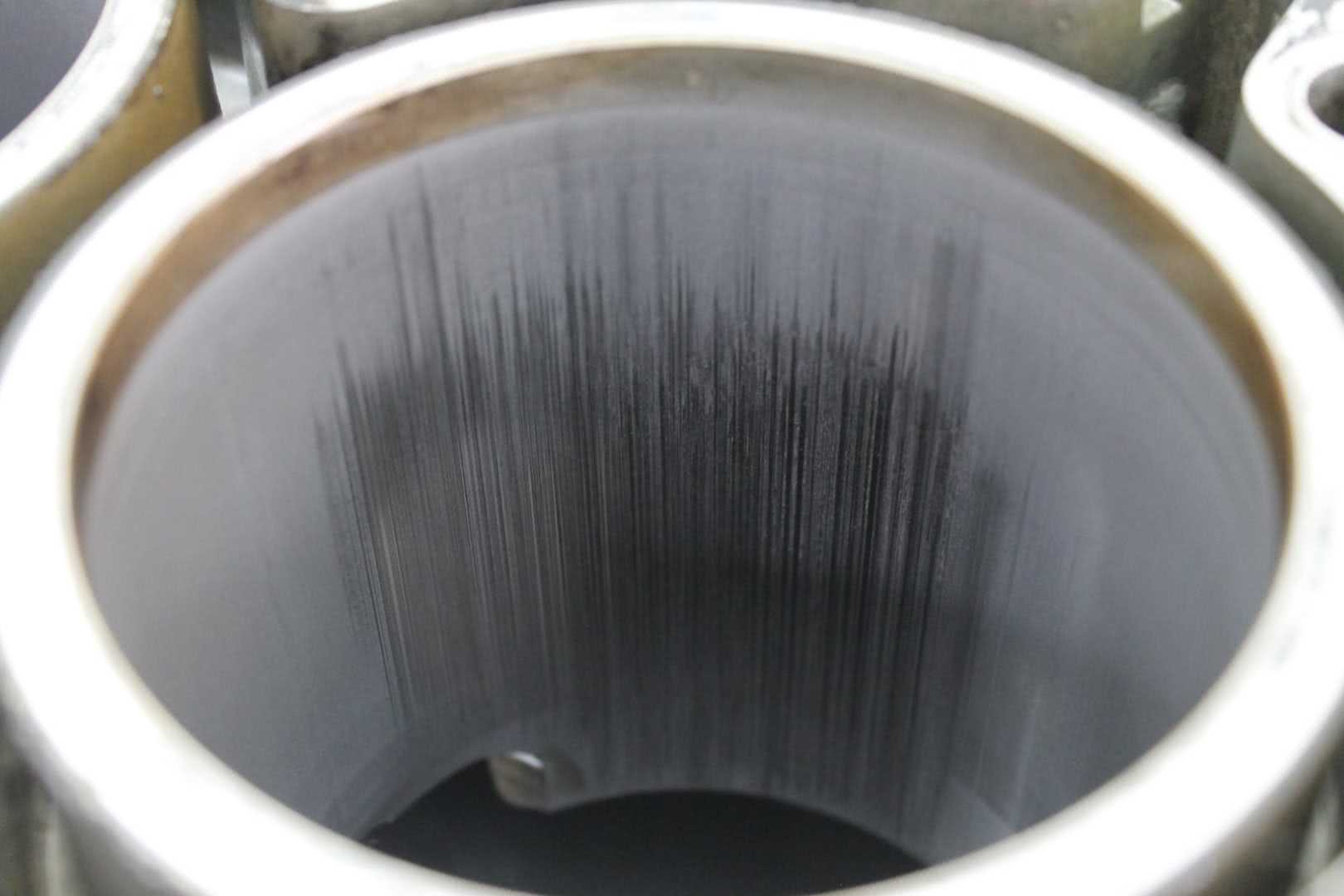
Bore scoring is a regular discussion topic among owners of modern water-cooled Porsches, here in Central Indiana, where seasonal driving and short spring and fall trips are common. Bore scoring is the formation of deep vertical grooves on the cylinder walls of an engine, caused when the thin oil film between the piston skirt and the cylinder wall breaks down, allowing the piston skirt to create metal-to-metal contact. Over time, this damage allows for blow-by, oil loss, and an increase in friction, which accelerates the wear. Once the cycle of bore scoring starts, it rarely stabilizes, with possible exponential increases in wear. Unfortunately, the issue is internal and often invisible until symptoms develop or the engine is inspected with a bore scope.
This condition mainly affects the M96 and early M97 water-cooled flat-six engines used in normally aspirated 996 and early 997 Carrera models, as well as related Boxster and Cayman variants. Under extreme circumstances, abnormal cylinder wear could occur in any engine, including Metzger-based motors. For the most part, however, bore scoring as it is commonly discussed does not afflict Metzger or traditional oil-cooled Porsche engines. Metzger engines, found in models such as the 996 Turbo and GT3, use a closed-deck crankcase with Nikasil-coated cylinders and a more robust lubrication system that maintains cylinder stability and oil film integrity under load. As a result, the pattern-based bore scoring seen in M96 and M97 engines is extremely rare in Metzger designs.
For PCA owners, we care about bore scoring because it affects engine longevity, operating costs, and resale value. A lightly scored engine may continue to run for many miles with only slightly increased oil consumption. A more severe case can lead to knocking noises at idle, smoking exhaust, heavy oil use, and eventually the need for a full engine rebuild. One of the challenges with bore scoring is that external symptoms often lag behind internal damage.
Bore scoring usually develops due to a combination of engine design, lubrication behavior, and operating conditions. Here is what is actually happening: In a horizontally opposed engine, each piston does not simply move in and out. Because the connecting rod operates at an angle except at the top and bottom dead center, the piston is pushed sideways against the cylinder wall on every power stroke. This sideways force is called piston thrust. One side of the cylinder becomes the primary thrust surface and carries most of the load. The earlier water-cooled engines used a design with relatively thin cylinder walls. When cold, the oil film is thinner, and piston clearances can be tighter. If the engine is subjected to enough load before reaching full operating temperature, the piston skirt can cause metal-to-metal contact. This repeated contact leads to scoring, most commonly on cylinders 4, 5, and 6.
Central Indiana driving patterns can unintentionally increase risk. Many PCA members store their cars during winter, then bring them out for short early-season drives. Cold starts followed by brief trips do not allow oil temperatures to stabilize. Allowing the engine to fully warm before spirited driving is critical. Avoiding heavy throttle at low RPM, especially in higher gears, helps reduce piston side loading. Using high-quality oil with a viscosity appropriate for Indiana’s temperature swings and changing it more frequently than the factory maximum interval helps maintain lubrication integrity.
Regular driving, once fully warmed, is generally beneficial. Engines that sit for long periods and only see short trips tend to suffer more than those driven consistently and properly warmed. This aligns well with typical PCA usage, such as weekend drives, tours, and Driver Education events.
The only reliable way to evaluate bore condition is a bore scope inspection performed through the spark plug holes. Oil analysis can suggest abnormal wear trends, but cannot confirm scoring. Compression and leak-down tests may still appear normal even when scoring is present. A bore scope inspection, whether during ownership or as part of a pre-purchase inspection, provides the clearest picture.
If bore scoring is found, the response depends on severity. Light scoring with stable oil consumption may simply be monitored over time. Severe scoring usually requires engine removal and rebuild, often involving cylinder reinforcement or replacement. Repair costs vary widely but commonly range from the mid-teens to well over $25,000, depending on scope and parts. This is not a minor repair and should be planned accordingly.
When buying a used Porsche in the affected model range, a bore scope inspection is strongly recommended. Cars with documented inspections, consistent oil changes, and informed ownership history carry less uncertainty. A car with known scoring may still be a viable purchase if priced appropriately and if the buyer understands the long-term implications.
For Central Indiana Porsche owners, trusted local expertise matters. Central Indiana European Performance shops, such as Next Level Automotive and Performance, are familiar with regional driving habits, seasonal storage realities, and the engines most commonly discussed in bore scoring conversations. Their experience with inspections, maintenance, and long-term ownership support is a valuable resource.
Bore scoring is not a reason for panic, nor is it a reason to stop enjoying these cars. With informed maintenance, proper warm-up habits, and periodic inspection, Central Indiana Porsche owners can significantly reduce risk and continue driving their Porsches as intended.